environmental education BC

Society Participates in Gleneagle Secondary Volunteer Fair

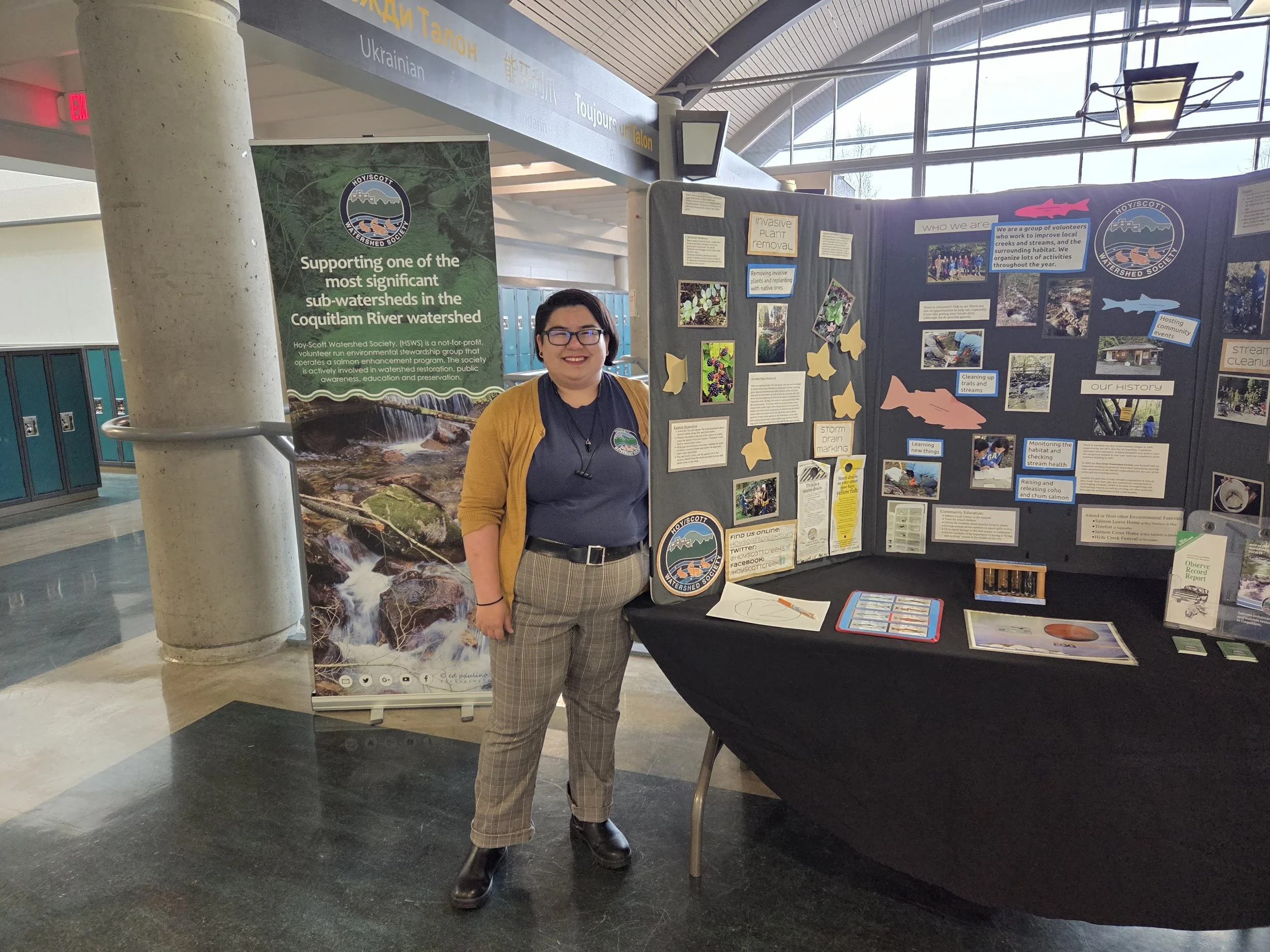
Big thanks to Maya Uno who represented us that day!

The Hoy/Scott Watershed Society was excited to be part of the Volunteer Fair at Gleneagle Secondary School on April 2, connecting with students eager to make a difference in their community.

Throughout the day, students stopped by our table to learn about the unique—and yes, a little “fishy”—volunteer opportunities available at the Hoy Creek Hatchery. From caring for salmon to helping protect and restore our local watershed, there are many meaningful ways for students to get involved.

Volunteering with HSWS offers more than just hands-on environmental experience. We’re proud to support students by providing opportunities to earn school volunteer hours, gain valuable skills, and receive reference letters for future academic and career pursuits. It’s all part of our commitment to helping youth connect with nature while building confidence and experience.

We would like to extend a big thank you to Gleneagle Secondary for the invitation and warm welcome. Events like this are an important way to engage the next generation of environmental stewards.

A special shoutout also goes to longtime HSWS volunteer Maya Uno for representing us at the booth and sharing her knowledge and passion with fellow students.

We look forward to welcoming new student volunteers and continuing to grow our community of stewards dedicated to protecting Hoy Creek and beyond.

Gleneagle Secondary signage. The school is closest to Scott Creek.

Watershed Education in Coquitlam’s City Centre

Team-building and getting FISHY with Douglas College staff as they stopped in to learn about our work during a nature walk in Hoy Creek Linear Park. Robbin from HSWS led two group stop ins.

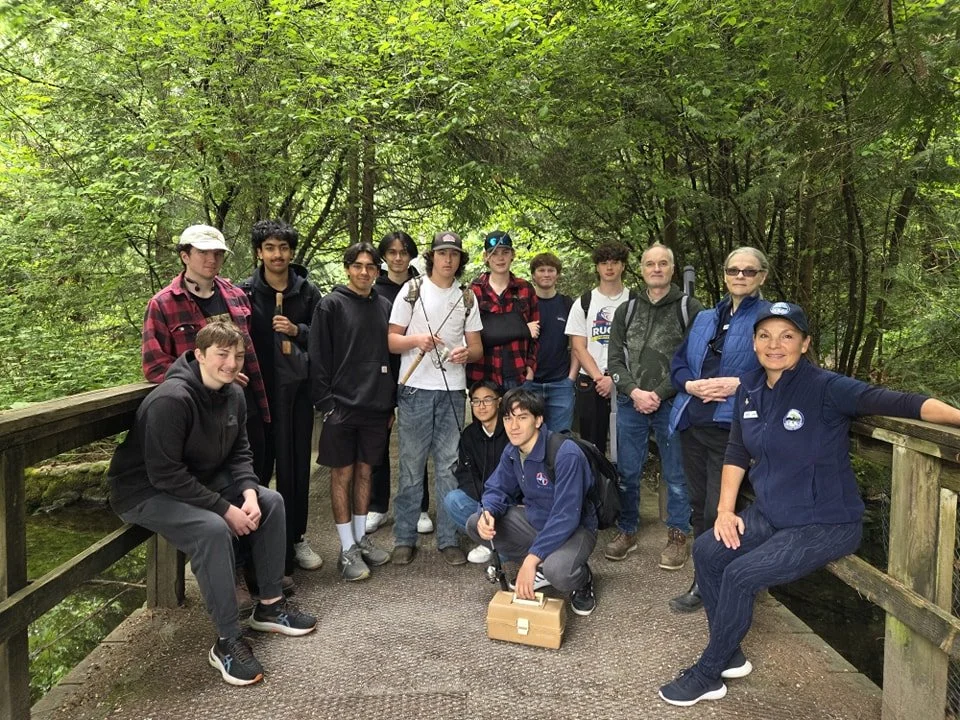
This year, the Hoy/Scott Watershed Society was thrilled to welcome local schools, Douglas College staff, and members of the City of Coquitlam Youth Council for watershed-focused tours at our hatchery. Guided with passion and insight by our volunteers Robbin Whachell and Anne Woosnam, these visits offered a firsthand look at the life cycle of salmon and the vital role of healthy watersheds in the heart of Coquitlam City Centre.

Learning In Action

Participants learned how hatchery operations support salmon enhancement, and discovered how streams like Hoy and Scott Creeks — nestled in the urban core — are critical salmon-bearing waterways. The experience helped bridge classroom learning with environmental stewardship, deepening participants' connection to their urban natural environment.

Riverside Secondary Fishing 11 class stopped by to learn about the two main species seen in Hoy Creek – Chum and Coho! We also hosted Gleneagle’s fly-fishing club.

Engaging the Next Generation

Tours with Douglas College staff and students offered future environmental leaders a behind-the-scenes perspective on salmon habitat restoration. Meanwhile, the Coquitlam Youth Council members, accompanied by their City staff discussed key topics that affect the city and hopefully will help spread watershed education in our community.

Salmon in the Classroom

This was the first year that we can recall, that eggs were provided for the Salmon in the Classroom program from our streams. We were so excited to have students and teachers return to release the hum salmon fry into Hoy Creek after carefully taking care of the salmon for months through the egg to fry stages! Read more

Coquitlam City Youth Council brought great questions from the civic view point.

Why It Matters

Getting students and youth leaders out into the watershed — especially in a landscape shaped by urban development — brings awareness to the delicate balance between city life and salmon-bearing streams. These tours foster a sense of responsibility and respect for the natural systems that sustain salmon and, by extension, our local ecosystems.

Thank You, Robbin & Anne

A heartfelt thank-you to Robbin and Anne for leading these educational tours with expertise and warmth. Your passion inspires both young learners and community leaders.