Hoy Creek

Volunteer of the Month: Kevin Elliott

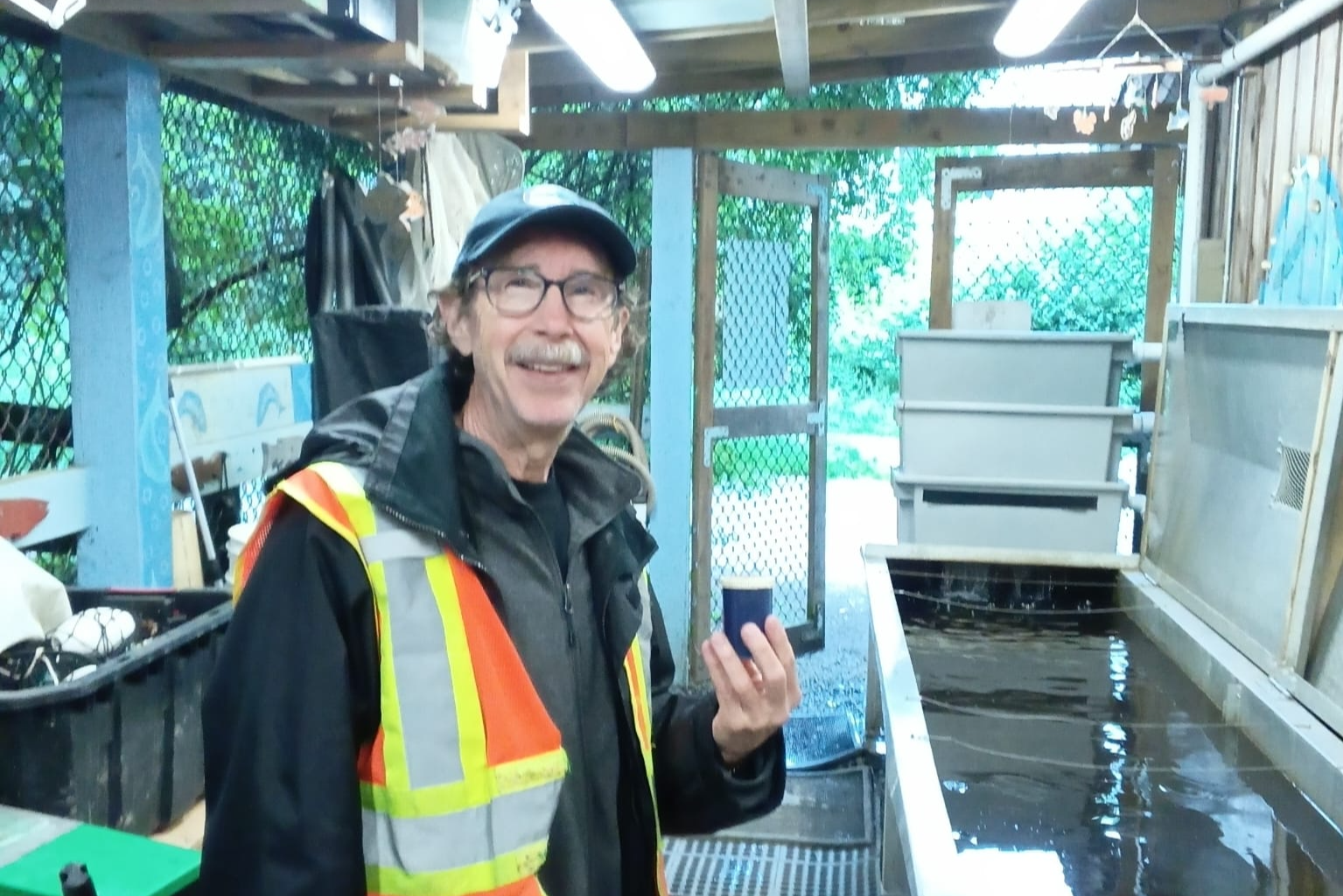
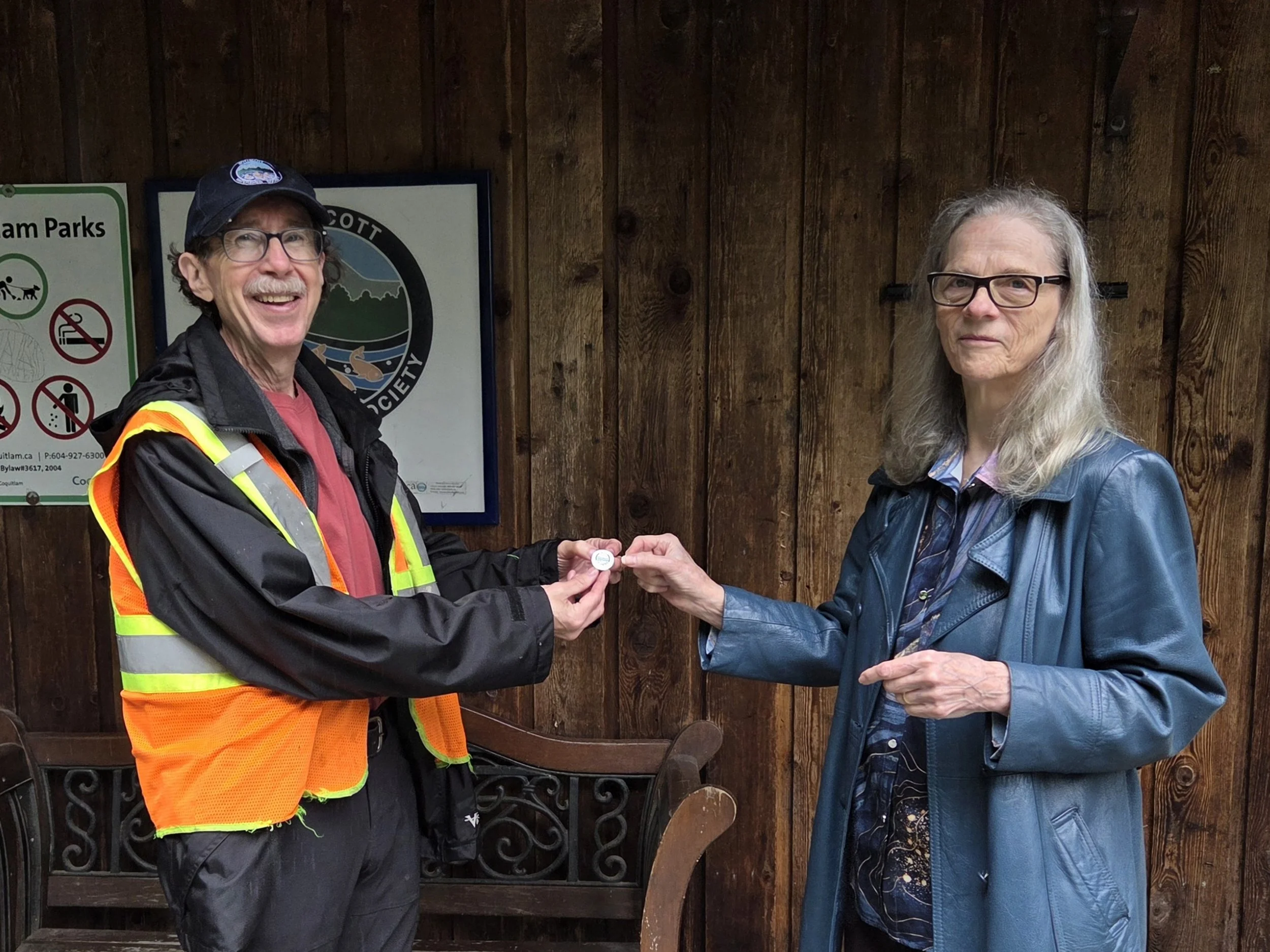
The Hoy/Scott Watershed Society is proud to recognize Kevin Elliott as our Volunteer of the Month.

Kevin has been volunteering with the Society for the past three years, serving as one of our dedicated daily fish feeders. Since retiring, he has been looking for meaningful ways to give back to the community, and volunteering at the hatchery has provided that opportunity.

As a daily feeder, Kevin plays an important role in raising the next generation of salmon. His commitment helps ensure that thousands of young fish receive the care they need before being released into Hoy Creek and beginning their journey to the ocean.

For Kevin, one of the most rewarding aspects of volunteering has been watching several generations of salmon grow and develop throughout their lifecycle. He has also gained a deep appreciation for Hoy Creek Linear Park, which he describes as "a jewel in our city."

One experience that left a lasting impression on Kevin occurred during his first year as a volunteer. He witnessed the impact of pollution after someone cleaned paint equipment into a neighborhood storm drain, affecting the watershed. The incident highlighted the importance of environmental stewardship and gave him firsthand insight into the collaborative efforts between the Hoy/Scott Watershed Society, the City of Coquitlam, and Fisheries and Oceans Canada when responding to threats to the creek.

Through his volunteer work, Kevin has developed a greater understanding of how fragile urban watersheds can be. He has seen how climate change, including summer droughts and heat waves, can affect salmon habitat, as well as the challenges posed by invasive species and the dumping of harmful substances into the environment.

When asked what advice he would offer to prospective volunteers, Kevin encourages people to consider daily feeding.

"Daily feeding provides an incredible opportunity to develop a relationship with each brood, seeing their growth from egg to returning adult fish. Seeing the wonder and happiness in children and adults as they observe the annual cycles of the hatchery and fish is very rewarding."

Thank you, Kevin, for your dedication, stewardship, and commitment to protecting and enhancing the Hoy Creek watershed. Volunteers like you help make our work possible and ensure that future generations can continue to enjoy and learn from this remarkable urban salmon stream.

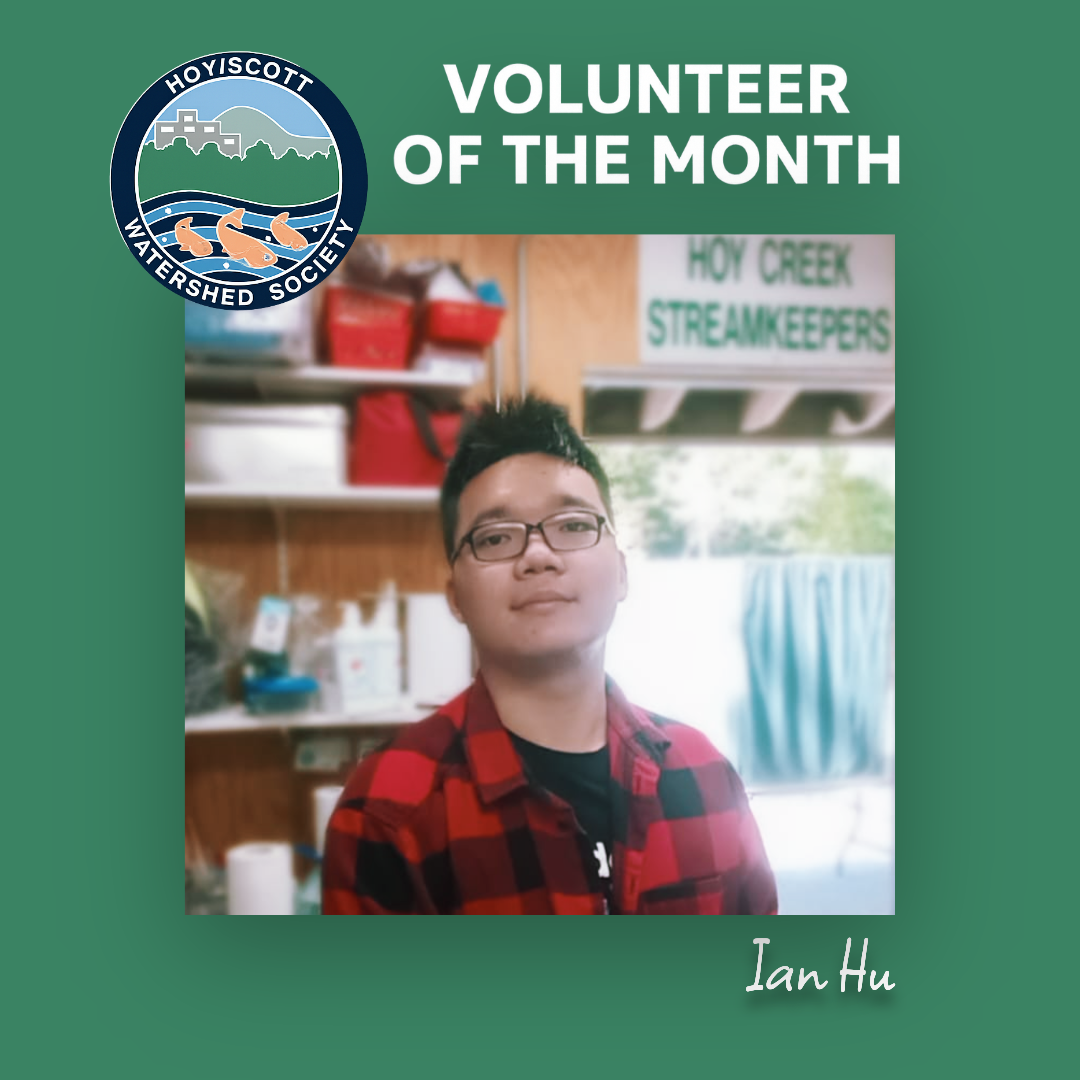
Volunteer of the Month: Ian Hu

At the Hoy/Scott Watershed Society, our work simply wouldn’t be possible without the dedication of our volunteers. Each month, we take the opportunity to recognize someone who has gone above and beyond in supporting our mission to protect and restore local watershed ecosystems.

This month, we’re proud to recognize Ian Hu as our Volunteer of the Month.

Getting Started

Ian has been volunteering with us for nearly nine months, bringing energy, consistency, and a strong commitment to environmental stewardship.

When asked what inspired him to get involved, Ian shared:

“I'm interested in helping protect the local environment, especially salmon habitat. Since Hoy Creek and Scott Creek are important to salmon, I wanted to be part of a campaign to help protect them.”

Hands-On Impact

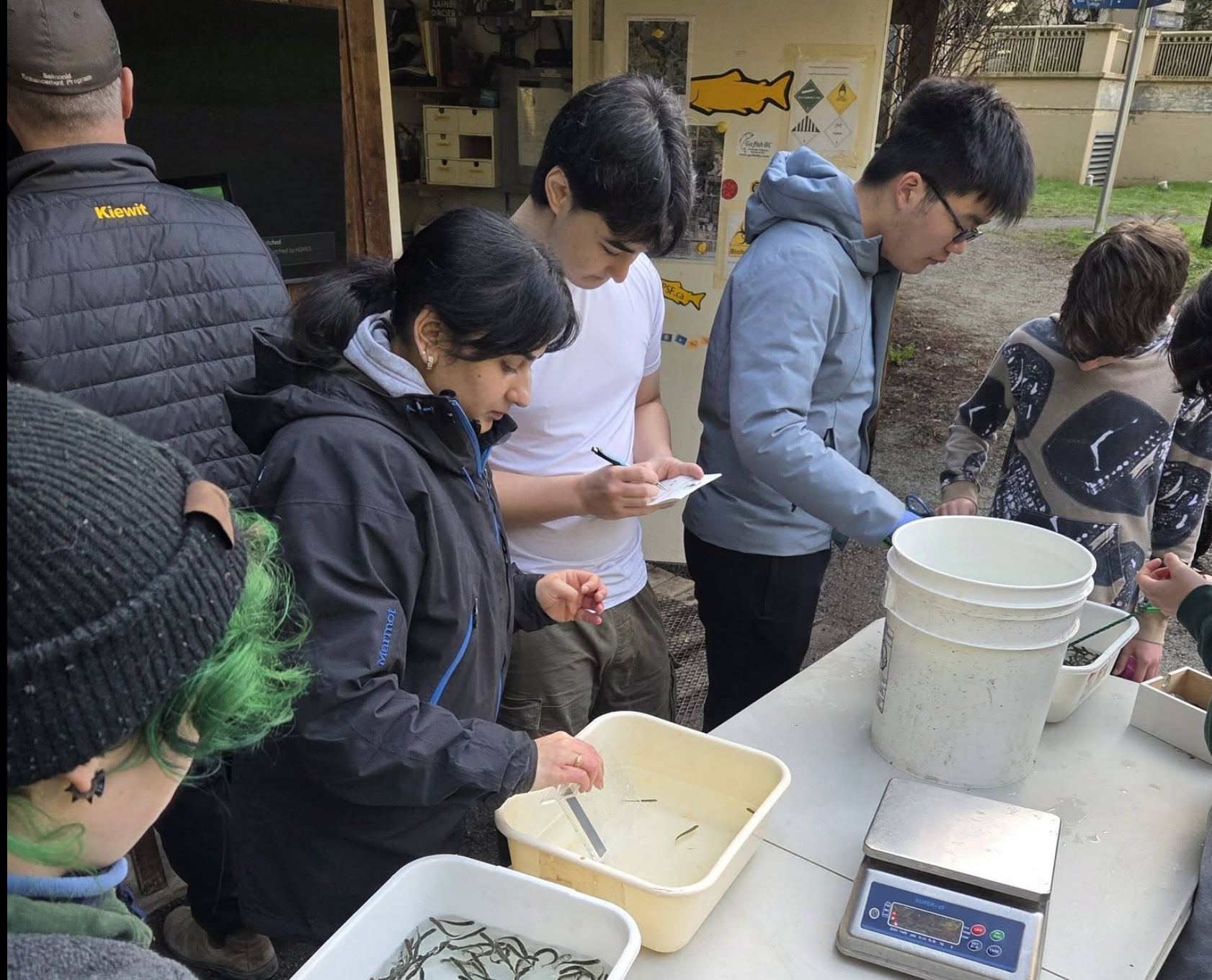
In his time with us, Ian has taken on a wide range of roles, including:

  • Propagation and planting

  • Fixing pipes and filters

  • Salmon health checks

  • Event support and promotion

  • Cleaning up creek and pond areas

Through this hands-on work, Ian has contributed directly to improving habitat conditions and supporting the health of local salmon populations.

Why It Matters

For Ian, the most rewarding part of volunteering is simple but powerful:

“The most rewarding part is knowing that the work we do helps support salmon and their habitat. It feels rewarding to contribute to something that has a real impact on the ecosystem.”

That sense of purpose is something many of our volunteers share—and it’s what drives meaningful, lasting impact.

A Lasting Impression

One of Ian’s most memorable experiences has been seeing the results of that work over time:

“The most memorable part was seeing the creek improve over time after our work was done. I'm most proud of being consistent and contributing regularly, even when the work is tiring.”

Consistency is at the heart of watershed stewardship, and Ian’s commitment truly stands out.

Learning Through Action

Volunteering has also deepened Ian’s understanding of how delicate and interconnected watershed systems are:

“It helped me understand how sensitive salmon habitat is and how small actions like cleaning ponds and caring for salmon can make a difference. I also learned how everything in the watershed is interconnected.”

Words for Future Volunteers

For anyone thinking about getting involved, Ian offers this advice:

“Give it a try. This is a great way to help protect salmon, learn about the environment, and make a positive impact in your community.”

Thank You, Ian!

Ian’s dedication, consistency, and passion for protecting salmon habitat make him a valued member of our volunteer community. We’re grateful for the time and effort he contributes—and proud to recognize him this month.

If you’re inspired by Ian’s story, we invite you to join us and be part of the work to protect our local waterways.

Society Provides 2025 Update to Coquitlam Council

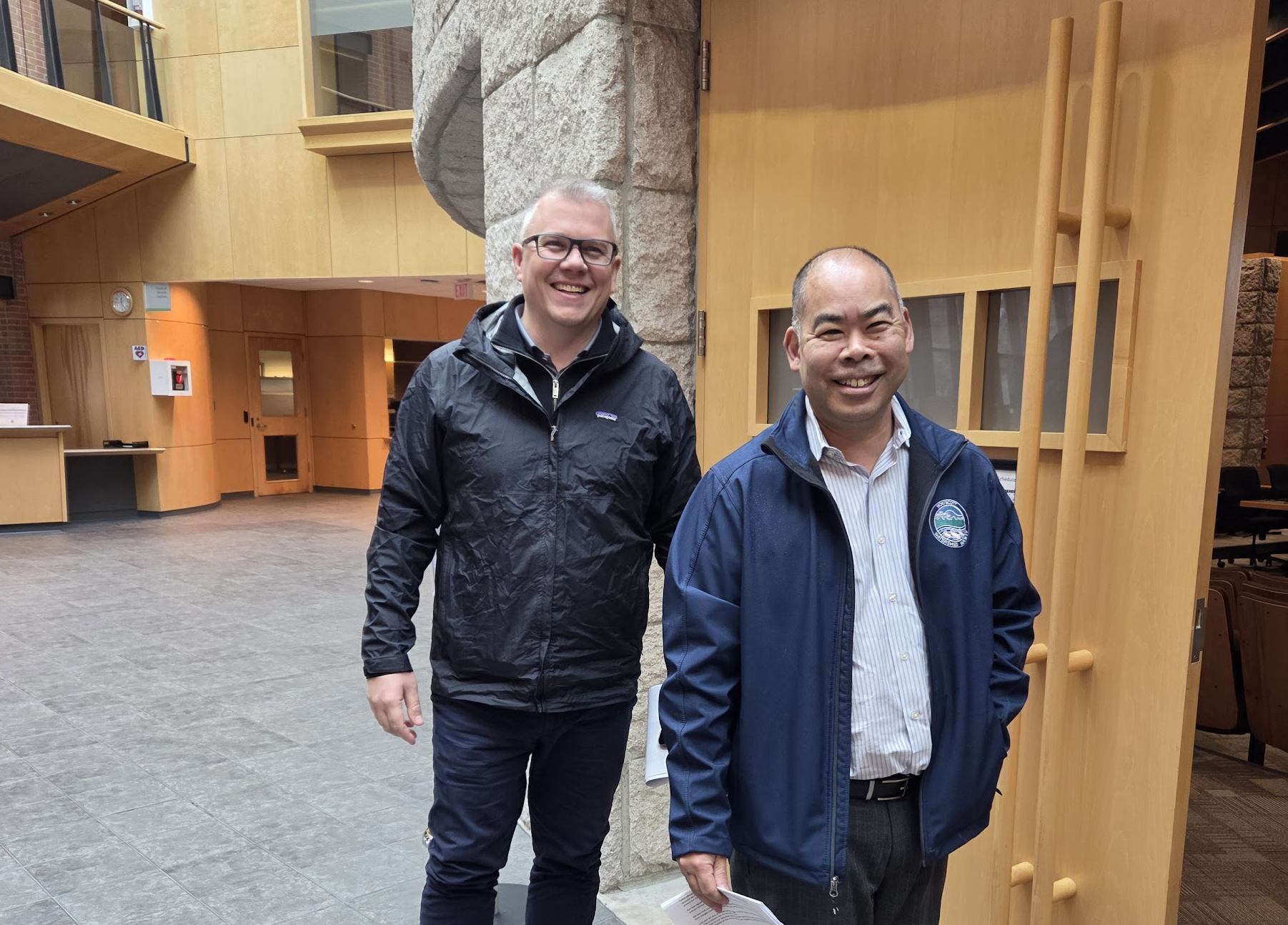
Kyle Uno and Tyler Storgaard in the council chambers at Coquitlam City Hall.

On April 13, the Hoy/Scott Watershed Society was pleased to return to Coquitlam City Hall to provide an update on our work and progress over the past year.

Representing the Society were Kyle Uno and Tyler Storgaard, who delivered a concise and informative presentation highlighting key achievements, ongoing initiatives, and future priorities.

We would like to extend our sincere thanks to the Acting Mayor and Council for the invitation and the opportunity to share this update. The discussion was both productive and encouraging, and we greatly appreciated the thoughtful and constructive feedback provided.

A Milestone Year for HSWS

One of the most significant highlights shared during the presentation was that in 2025, the Hoy/Scott Watershed Society officially became a registered charity. This milestone strengthens our ability to expand our impact, enhance fundraising efforts, and continue protecting and restoring the local watershed for future generations.

Progress in Restoration and Planning

Over the past year, our team and volunteers have completed meaningful riparian restoration work along Hoy Creek, helping to improve habitat conditions for salmon and other species that rely on a healthy watershed.

We also introduced early plans for a future hatchery building. Our current facility has served the community well but is nearing the end of its lifespan. Looking ahead, a new hatchery will help ensure the long-term sustainability of our salmon enhancement and education programs.

Strong Partnership with the City

Our ongoing partnership with the City of Coquitlam continues to be a cornerstone of our work. Support and collaboration with the City enable us to advance key initiatives, engage the community, and care for important natural spaces like Hoy Creek.

We are grateful for the opportunity to share our progress and vision, and we look forward to continuing this important work together.

For those interested in more details, additional information shared with Council can be viewed here:

Kyle Uno, HSWS President and Tyler Storgaard, VP and Hatchery Manager

Spawner Survey Report for 2025

HSWS Photo

Hoy/Scott Watershed Society volunteer, Rodney Lee, led our spawner survey for 2025.

Spawner surveys are a basic form of stock assessment where the data can be used to gauge the health of salmon returns. In short, we walk the creek and count live and dead salmon (by species) to get a sense of the number of returning fish. Data is submitted to the Streamkeeper’s database as well as to the Department of Fisheries and Oceans Canada (DFO).

Participants walk in chest waders in and around the stream including stepping over fallen trees, walking on in-stream rocks and muddy banks, and crouching under overhanging tree branches to identify salmon species targeting chum and coho but occasionally other species (chinook, pink) may have been seen.

The weekly survey area was the stretch of Hoy Creek from the Johnson St. pool (between Glen and Guildford) to Hoy Creek Hatchery in Coquitlam and statistics were taken from October through to January.

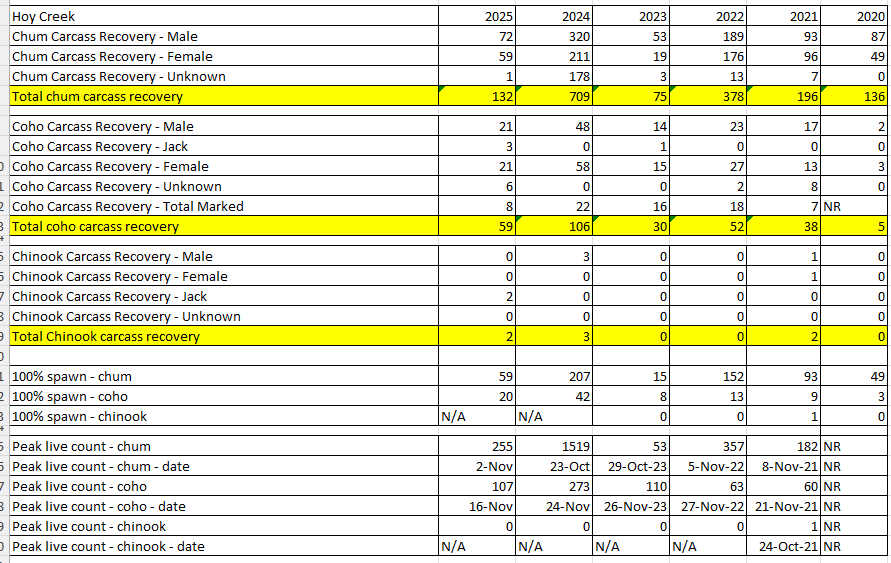
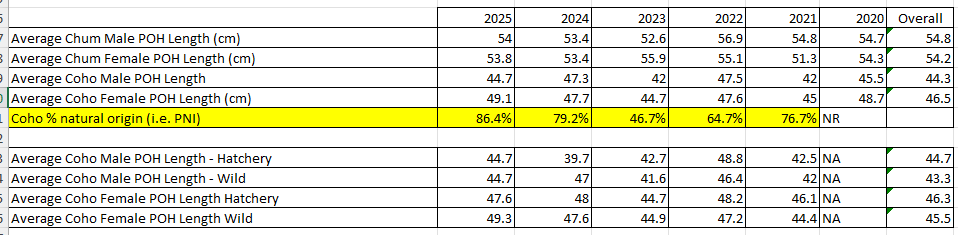
Here are the survey details which provide totals of carcasses for chum and coho, as well as peak live counts.

Rodney Lee walking in Hoy Creek to check for dead or live salmon. (HSWS photo)

2025 Spawner Survey Data and Comparison back to 2020

NOTE: Should you see salmon in the creek that have been cut in half, or have the tail or head cut off, from October through December that could mean those salmon have been marked for the annual Salmon Spawner Survey. We count live and dead fish weekly in a designated stretch of the stream. The dead salmon are cut as to not double count the dead fish the next week. This helps get an absolute count of salmon that have spawned in a particular area of a stream.

Tips for Spotting Salmon in Local Streams

Can you spot the salmon? (Photo: HSWS)

Nature has its own timing…

Each year there is an increase in the number of phone calls and emails the Hoy/Scott Watershed Society (HSWS) receives about the salmon return.

We’re often asked, “Can you tell me what day the salmon are returning?” or “Is there a less busy time to see the salmon?” or “I went to look in the creek but could not see any salmon. What is the best day to come?”

Rain is the most important ingredient. Once the rains return, the salmon follow.

While we know that chum salmon generally return in early October after the first heavy rains, there is no set date, and it fluctuates year to year. Our usual response to this question is to check our website or social media pages.

The good news is, chum and coho salmon have been spotted in Hoy Creek since Oct. 19, 2025.

Wait for the rain to subside and the water levels to lower to spot salmon. Heavy rain results in fast and high-moving water making it difficult to see the salmon.

Hoy and Scott creeks run through urban. private and public lands. You can view salmon any time you like from public areas like the Hoy Creek Linear Park, or beside Guildford Way or off Lansdowne Drive for Scott Creek.

A chum salmon in low creek water on a dry day may not be seen on a heavy rain day when water is rushing and the level is higher. (Photo: HSWS)

Tips for when and how to view:

  • Check first. It’s best to go once you’ve heard that the salmon have returned and have been spotted in the creeks (check our website or social media channels: Instagram or Facebook page).

  • After a rain, or on a clearer weather day. When the rains subside, creek depths lower, and this allows for the water to be quieter and more clear to see through.

  • Listen! You may often hear a salmon before spotting it. They move over shallow waters, or up over rocks or logs by flashing their tails making a splashing sound.

  • Look carefully. Salmon, in particular chum salmon, have similar colours to the rocks or stones in the stream and are therefore naturally camouflaged. Coho are even better at hiding than the chum. If you are expecting to see bright red salmon, you’ve come to the wrong creeks.

  • Sunglasses may help. Fishermen often wear polarized sunglasses to better spot fish in the water.

  • Resting places. Salmon have an arduous journey upstream. They can often be spotted under bridges or hanging branches or fallen logs to build up strength for their next climb.

  • Patience! Salmon may be right where you are looking, but they can be very hard to spot. Take lots of time. It’s often best to stay in one spot for some time to observe before moving further up or down the creek to try another area.

  • Don’t be discouraged. Salmon may not be out every day in the exact spot you are standing during the time you are there. The creeks are long. Try to come another day. When you finally do spot a salmon, you’ll be glad you did! 


Location via Google maps.  The Hoy Creek Hatchery is located on Hoy Creek Trail, west of the City Centre Aquatic Complex at the corner of Pinetree and Guildford Way. Simply Google "Hoy Creek Hatchery" to locate.

Hoy Trail has several entrances:

- Walk-in from Princess Cres. west of City Centre Aquatics Complex
and Lafarge-Lake Douglas Station;
- Walk-in from behind Douglas College and head south;
- Walk-in from Guildford Way (between Johnson and Pinetree) and head north;
- Walk-in from Walton Avenue, or behind Walton Elementary and head south;
- Walk-in from the foot of Lasalle Place and head northeast.

Salmon of Hoy and Scott Creeks:

Chum salmon begin to arrive in early to mid-October through to early November.  Generally, the peak of the run is around the 3rd week of October. They have dark red and black stripes.

Coho salmon arrive in late October through to late December.  Typically, the peak of the run is the 2nd or 3rd week of November.  There are very few fish around into December but there has been the occasional year with good numbers of fish in the stream through to mid or late December.

During odd-numbered years (e.g. 2021), Pink salmon may be found in Hoy and Scott creeks from September to early October.  They are not typically found in large numbers.

Although they don't favor smaller streams like Hoy Creek and Scott Creek, occasionally, Chinook salmon from the Coquitlam River find their way into the creeks.  This may happen under heavy rainfall conditions when the water levels in our streams and rivers are high.  The occasional fish find the current in the creek attractive and detour away from the heavier flows in the Coquitlam River.

Learn more about the lifecycle of the salmon.

Enjoy your salmon spotting!


"The salmon runs are a visible symbol of life, death and regeneration, plain for all to see and share ... The salmon are a test of a healthy environment, a lesson in environmental needs. Their abundant presence on the spawning beds is a lesson of hope, of deep importance for the future of man."
-- Haig-Brown, 1974 (The Salmon)

Invasive Species Work Integral for a Healthy Riparian

Adela and Anne seen near a hedge of Smallflower touch-me-not on Hoy Trail.

This summer, the Hoy/Scott Watershed Society continued its important work tackling invasive plant species in Hoy Creek Linear Park — efforts led by our dedicated volunteers Anne Woosnam and Robbin Whachell. Invasive plants such as Himalayan balsam and Smallflower touch-me-not can quickly spread, outcompeting native plants and altering the habitat that salmon and other wildlife rely on. With the help of our volunteers and community partners, we’ve made great strides in reclaiming space for native species to thrive.

June: Smallflower Touch-Me-Not

Our summer work began in June with a focus on Smallflower touch-me-not (Impatiens parviflora), an invasive balsam species we first encountered along Hoy Trail last year. Despite last year’s efforts, it was clear how aggressively this plant can return — spreading quickly through the same areas.

Thanks to the persistence of Anne, Adela, and Robbin, we were able to pull large amounts from the trail edges before they could set seed. Early intervention is key, and each pull helps prevent further spread. (Learn more about this invasive balsam here: BC Invasives – Smallflower Touch-Me-Not)

July: Himalayan Balsam

Anne helps fill bags and the wagon with tall Himalayan balsam along Hoy Trail.

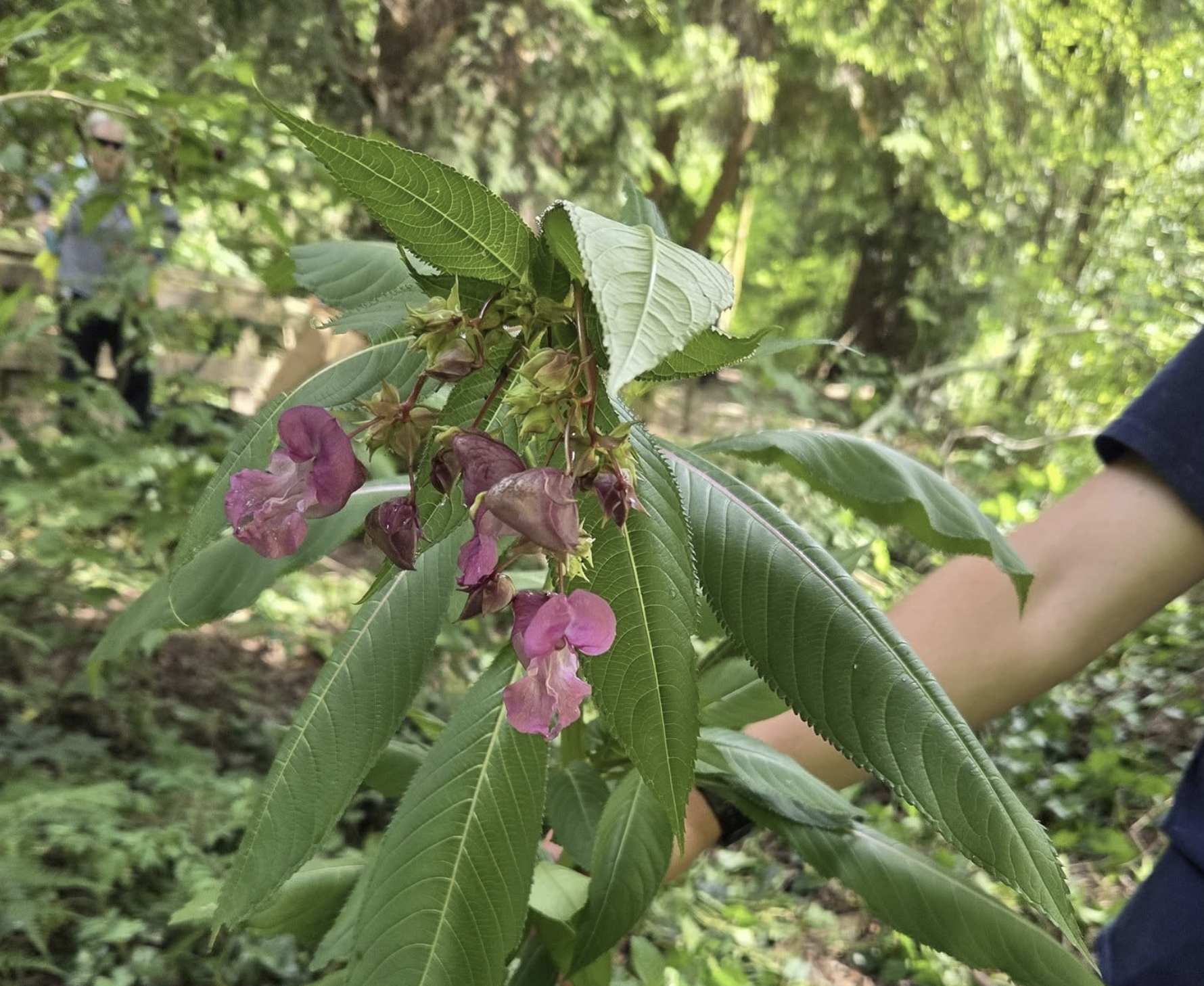
End of June and into July, attention turned to Himalayan balsam (Impatiens glandulifera), another invasive species that thrives in moist riparian areas like Hoy Creek. With its pink flowers and explosive seed pods, it may look beautiful, but it can quickly dominate streambanks and crowd out native plants.

This pull was a true community effort: together we filled nine large bags of balsam, with even more left in piles for collection. Volunteers included Anne, Tyler, Dylan, Matt, Rhyann, Lucas, and Robbin — along with Alex from Broombusters Coquitlam, who brought energy and expertise. A big thank-you as well to residents Jen and David, who jumped in after seeing us at work. That’s community stewardship in action!

We are grateful to the City of Coquitlam Natural Areas team for coordinating pickup, and to Broombusters Coquitlam for donating collection bags to support our efforts.

Himalayan balsam (Impatiens glandulifera)

Why It Matters

By removing invasive plants, we’re giving native species — the plants that provide food and shelter for insects, birds, and salmon — a better chance to flourish. Every bag pulled means less seed dispersal next season, and a healthier creekside ecosystem for years to come.

Thank You Volunteers

A huge thank you to Anne and Robbin for leading this summer’s invasive species pulls, and to every volunteer and community member who joined in. Your hands-on work is helping protect Hoy Creek and its surrounding habitat.

Together, we’re building a stronger, healthier watershed.

Restoring Hoy Creek’s Riparian Zone: A Community Effort

We’re excited to share that restoration of the riparian area around Hoy Creek—disturbed last summer during the removal of old concrete structures—is now complete!

Thanks to the hard work and dedication of our amazing volunteers, the Fisheries and Oceans Canada Salmonid Enhancement Program (SEP) team, and supportive friends and family, the area has now been replanted and is ready to thrive.

It wasn’t easy work—digging, hauling, planting—but the spirit of teamwork made the effort lighter and the days brighter. As always, we are grateful for our incredible community and those who stepped up to help.

💚 Special thanks to Tyler, Thomas, Anne, Amy, Jiameng, Eric, Glenda, Dillon, Kathy, Madeleine, and Sam for giving your time and energy to make this restoration possible.

We also extend a BIG thanks to the Pacific Salmon Foundation for their ongoing support of salmon and habitat recovery in our region!

🌱 If you’re walking the Hoy Creek Trail, you may notice green fencing in the restoration area. Please respect the barrier and help us protect this young growth by reminding others to do the same. With a little time and care, this area will return to a lush, vibrant habitat that supports both wildlife and the health of our watershed.

Local Schools Release Salmon Fry and Visit Hoy Creek Hatchery

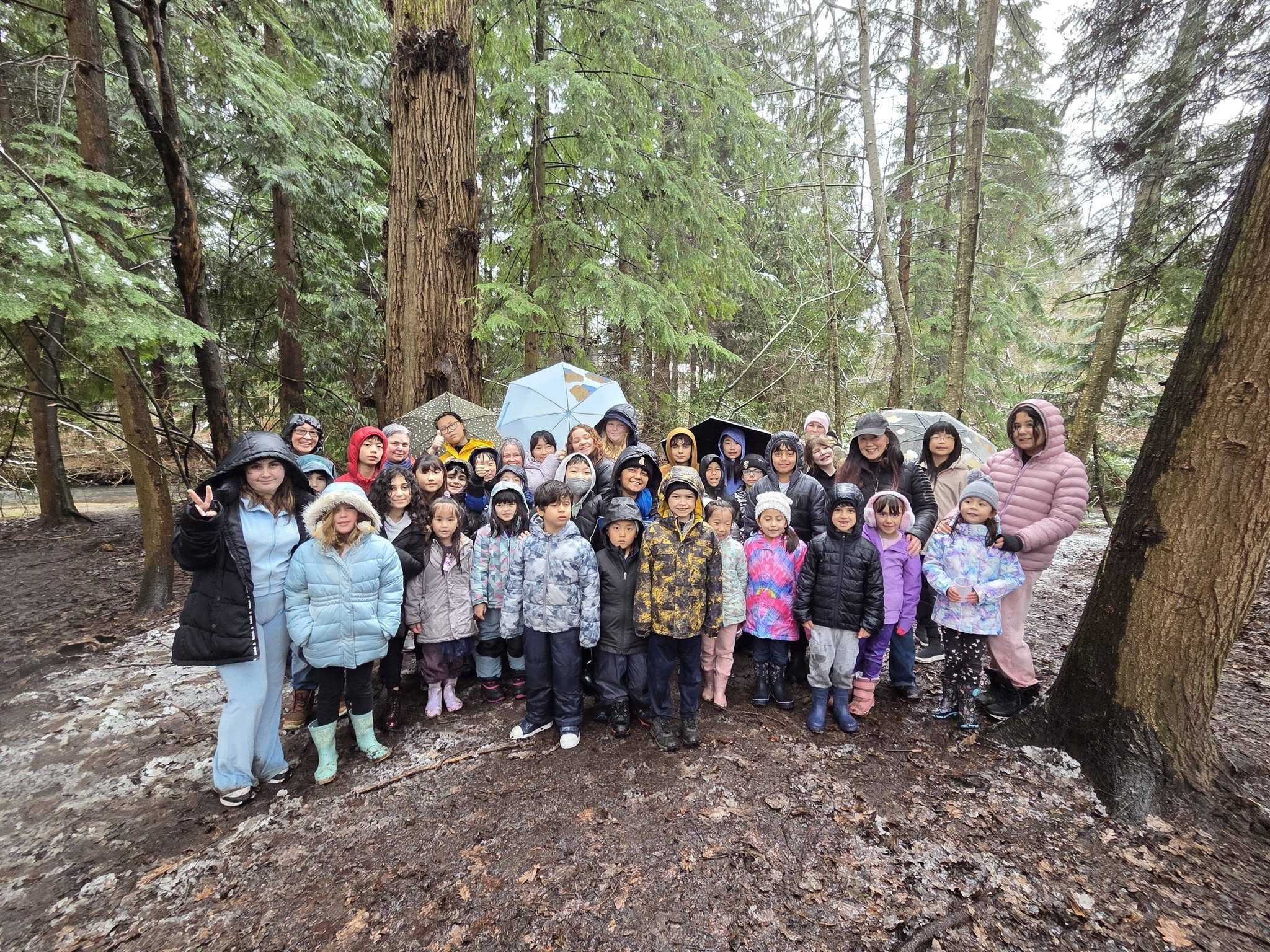
Panorama Heights Elementary | Salmon in the Classroom release at Hoy Creek, Coquitlam

We were thrilled to welcome students from three local elementary schools to Hoy Creek this March, wrapping up another successful season of Salmon in the Classroom!

A big thank you goes out to Smiling Creek, Blakeburn, and Panorama Heights Elementary Schools for participating in this important salmon education program. Each school received approximately 50 Chum salmon eggs from Hoy Creek in the winter, carefully raising them in classroom aquariums while learning about the salmon life cycle and the importance of healthy waterways.

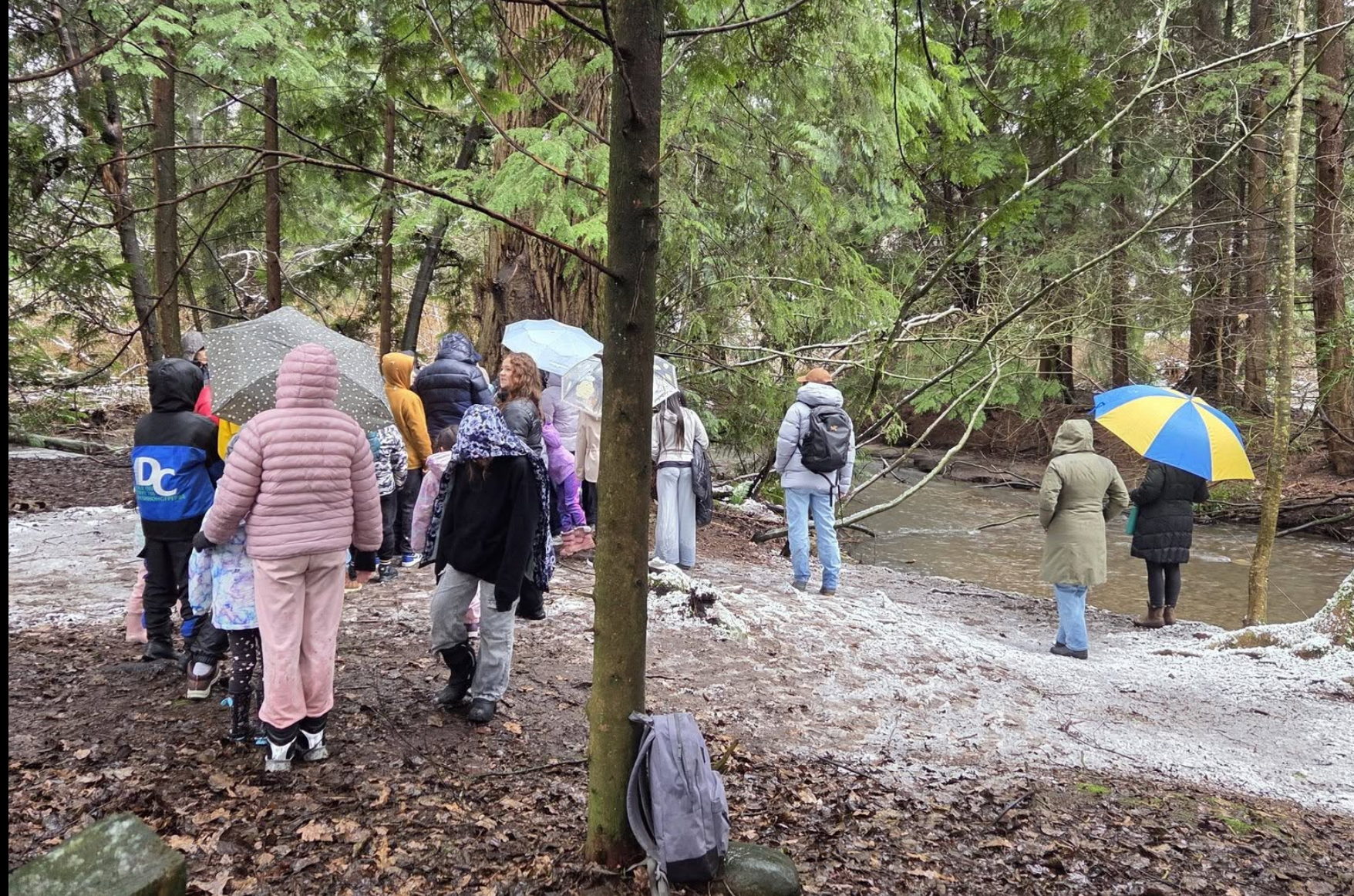
In early March, the students proudly released their young Chum fry into Hoy Creek, knowing they were giving them a strong start on their journey to the Pacific Ocean.

Teachers net chum fry into cups for students to release into Hoy Creek.

After the release, classes toured our Hoy Creek Hatchery, where they got to see firsthand the work being done to support salmon populations in our watershed. Students were excited to observe the 20,000 Chum fry and 3,500 Coho currently being raised at the hatchery.

Tours were led by our dedicated volunteers Anne Woosnam, Maya Uno, and Robbin Whachell, who shared their knowledge and passion for salmon stewardship with each group. It’s always inspiring to see young minds light up as they connect with nature and understand the vital role they can play in protecting it.

We’re proud to support Salmon in the Classroom and thank our local schools, teachers, and students for being part of the solution for salmon and our environment!

Minds light up when they connect with nature!

Each release ended with a tour at the hatchery. Maya Uno (back middle), HSWS volunteer discusses challenges faced with pollution events in our streams.

Salmon Talk Comes to Seniors at Parkwood Manor

Robbin and Anne are both board members and volunteers of Hoy/Scott Watershed Society.

On November 1, Hoy/Scott Watershed Society (HSWS) volunteers, Robbin Whachell and Anne Woosnam, brought the wonders of the local ecosystem to Parkwood Manor in Coquitlam. Engaging residents who live adjacent to Hoy Creek, the duo led a lively and informative discussion about the life cycle of salmon, the significance of their presence in the watershed, and how they contribute to the health of the local environment.

Residents of Parkwood Manor, many of whom regularly stroll along Hoy Trail and cherish the tranquil scenes of the stream, enthusiastically participated, asking insightful questions and sharing their observations. The talk not only deepened their understanding of the natural world surrounding them but also highlighted the close connection between the community and the watershed.

HSWS extends its sincere thanks to the management of Parkwood Manor for facilitating this enriching 1-hour session. We are thrilled to have already received an invitation to return next year and look forward to fostering this connection once again.

Through stewardship, community outreach, education, and advocacy, we are dedicated to protecting the Hoy/Scott Watershed, and it is opportunities like these that help strengthen our mission.

Anne answers questions after the talk.


Poaching Reported in Hoy Creek

Poaching is NOT okay! We received a report on Oct. 24 from a Coquitlam resident, of an account of poaching in Hoy Creek.

City Bylaws is investigating.

It's ILLEGAL to fish in local streams, which also includes the removal of carcasses (dead fish). Dead or alive, it is illegal to take fish. If you want to fish, you must have a license to fish, and you must know where it's okay to fish.

If you see people fishing at local streams in any way – with a line, net, or anything else, please contact "Report All Poachers and Polluters" (RAPP) and fill out this form.

Or fisheries violations, contact Fisheries and Oceans Canada (DFO) at 1-800-465-4336. You can also contact your local RCMP detachment or municipal police.

Hoy/Scott Watershed Society has information on our Contact Page.

Photo sent in by a resident on Oct. 24, 2024.